
Japanese BL “Love Begins in the World of If” Review (2025)
 The Binge Team
- February 28, 2026

Ever had one of those days where you just wish you could wake up as a different person? Not a superhero or a billionaire, just a version of yourself that doesn’t freeze up in meetings or overthink a “hello” to a coworker? That’s exactly the headspace Love Begins in the World of If ( ifの世界で恋がはじまる) taps into.
When I first read the synopsis, I thought I was in for a standard parallel-timeline love story. You know the drill: guy meets magic, guy finds a “better” world, guy falls in love. But after finishing all six episodes, I realized the show is actually asking a much ruder, much more valid question: What if your life isn’t stagnant because the world is against you, but because you’ve stopped trying? Like Cherry Magic!, there's magic here, but it's like a reflection of an inner change that was needed and just taking too long to happen. It's the same relaxed comfort that's present in Countdown to Yes, but with a bit of a fanciful twist to gently shove its protagonist out of his funk and into the real world.
The Plot: The “What If” Mirror
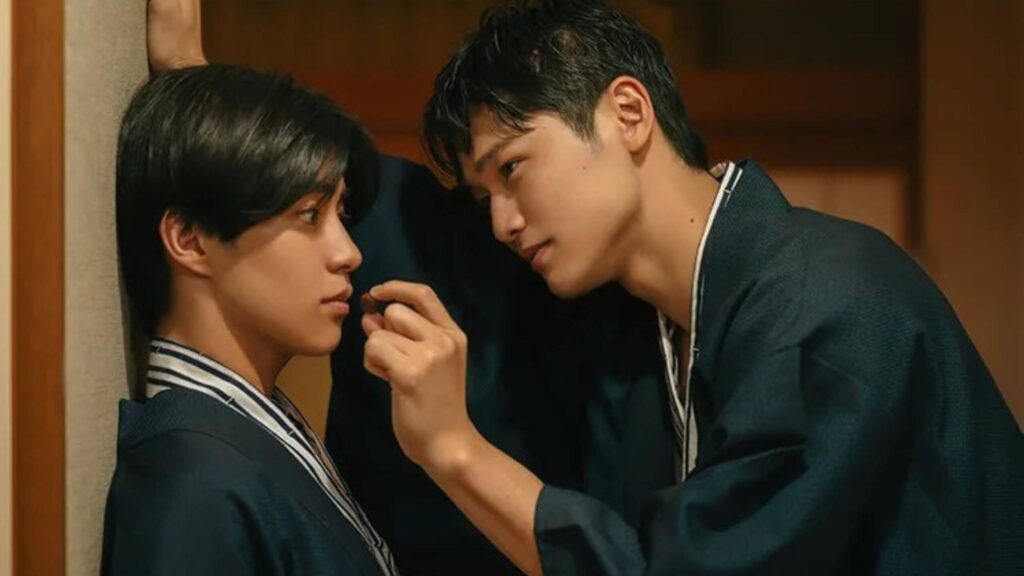
The story follows Kano Akihito (Kotaro Daigo), a guy who is basically emotionally boxed in. He’s a former tech engineer who got moved to the sales department, and he’s struggling. Hard. He isn’t unlikeable, but he’s incredibly passive. He lets life happen to him rather than stepping into it.
His foil is Ogami Seiji (Daisuke Nakagawa), the “ace” of the sales team who is everything Kano isn’t: confident, charming, and expressive. After a particularly rough day and a blow-up with Ogami, Kano wanders into a shrine and finds a mirror that promises to show him the person he wishes to become.
Suddenly, he’s in a “Utopia.” In this new world, Kano is confident, his coworkers actually like him, and Ogami, the guy he’s been admiring from a distance, is looking at him with an intensity that is definitely not “just colleagues.”
The “Ideal” Self vs. Reality
What I loved about how this “upgrade” was handled is that it wasn’t just magic making things better. It showed that even in a “perfect” world, unless you reset your habits, everything eventually feels the same. Kano realizes that the reason everyone is nicer to him in the parallel world isn’t that they changed—it’s because he changed. He was more open, so they were more open.
It’s a refreshing take. Usually, in these types of shows, the lead is rewarded just for enduring hardship. Here, the story argues that you have to notice yourself and actually prioritize your own growth. Frustratingly, growth requires effort, and the drama doesn’t shy away from showing how uncomfortable that is for someone like Kano.
The Leads: Chemistry and Height Gaps

Let’s talk about the actors, because they really carried the emotional weight here.
Kotaro Daigo (Kano): He’s great at playing “exhausted.” You can see the burnout in his eyes in the early episodes. When he transitions to the more confident version of himself, it’s subtle but effective.
Daisuke Nakagawa (Ogami): First off, the height difference between these two is massive and, quite frankly, adorable. Ogami is interesting because we don’t get much of his POV, but you can tell he’s observant. He isn’t a “savior” character; he doesn’t try to “fix” Kano. He just nudges him when he needs it.
The romance itself is quiet. If you’re looking for a loud, fiery, “can’t keep our hands off each other” type of BL, this isn’t it. The tension comes from emotional hesitation, which felt surprisingly real. They have good chemistry, but it’s built on small moments—a look, a shared drink, a hand squeeze.
But here’s the problem…
As much as I enjoyed the vibe, the show really could have used two more episodes. At only six episodes (around 25 minutes each), the pacing feels like it’s constantly racing against the clock.
The Pacing: Some of the reflection scenes are beautiful, but others feel like they happen in fast-forward.
The Ending: The finale feels a bit too convenient. After all that build-up about internal change, the resolution with the romance felt rushed.
The “Bland” Factor: Because they were rushing to the finish line, the intimate scenes—especially the kisses—felt a little lackluster. They didn’t have that “fiery” spark that the middle of the show promised.
Lighting and Music
I have to give a shout-out to the production. The cinematography actually helps tell the story. The “real” world is shot in cold, clinical blues and greys, while the “parallel” world feels warmer and more inviting. It’s a simple trick, but it really elevates the watching experience. Also, the opening OST is a total bop—I didn’t skip it once.
Worth the Watch?
Overall, Love Begins in the World of If is a thoughtful watch. Maybe I went too far down the philosophical rabbit hole because I found Kano’s struggles so relatable, but I think most people will find something to like here.
It won’t drown you in melodrama or spoon-feed you fluff. Instead, it lets you sit with the uncomfortable fact that sometimes the only way out of your misery is an internal change. It isn’t a life-altering masterpiece, but it’s a surprisingly reflective show that’s perfect for a weekend binge.
✦ Watch This If You Loved
Highly recommend Love begins in the World of If for anyone who loves individual's journey from burned-out isolation to self-advocacy offers a reflective, grounded message about taking accountability for your own happiness.
Looking for more dramas like Love Begins in the World of If? Check out these similar picks:
Drama Info
TitleLove Begins in the World of If (2025)
Total Episodes6 (Complete)
Review6 Episodes
CountryJapan
Genre BL · Romance · Fantasy
Release DateNovember 21st · 2025
Stream
🎬 Viki
Main Cast

Nakagawa Daisuke
Ogami Seiji

Daigo Kotaro
Kano Akihito
MAB Score
8/10
Overall Rating
Story
Acting
Chemistry
Rewatch Value — 6.5/10
I would come back to this whenever I want an easy weekend watch.