
Sins of Kujo Review: Yuya Yagira’s New Legal Drama on Netflix
 The Binge Team
- April 9, 2026

I am out here losing my grip thanks to Sins of Kujo. This newest Netflix legal drama will make you forget everything you assume about courtrooms, suits, drama, and big speeches— it doesn’t stick around long. Instead, this Japanese series throws legal perfection away. Meet Kujo: attorney by title, survivalist by lifestyle, camping on a roof like it’s normal. His office is a freaking tent. His mission is to represent people whom everyone else ignores or attacks. From episode 1, the tension grips. And somehow, that raw edge keeps me watching.
The Most Unusual Person You Might Come Across
Taiza Kujo (Yûya Yagira) puzzles most people. Not driven by courtroom drama like in shows, he focuses strictly on legal rules, defending whoever hires him, even if others call them monsters. While tension rises nearby, he keeps still, voice steady. Opposite his icy presence stands Shinji Karasuma (Hokuto Matsumura), whose warmth cuts through the quiet tension without a word. Funny how quietly they move through Tokyo’s shadows, isn’t it? Kujo thinks three steps ahead, cold but sharp, so different from everyone else lately that it almost feels unreal.
Why This Drama Feels Impossible to Stop Watching
This show moves at a pace that hits hard. Each new case lands like a sudden blow. Those behind the script made clear how power plays work inside courtroom walls. Lighting stays shadowed, heavy, fitting the weight of each story told. Nothing here gets softened or made easier to swallow. Honesty hits hard when it shows poverty, crime, the so-called underworld, no sugarcoating. Each episode made me rethink right and wrong, which is just what powerful storytelling ought to pull off.
Episode 1: The Worth of a Leg
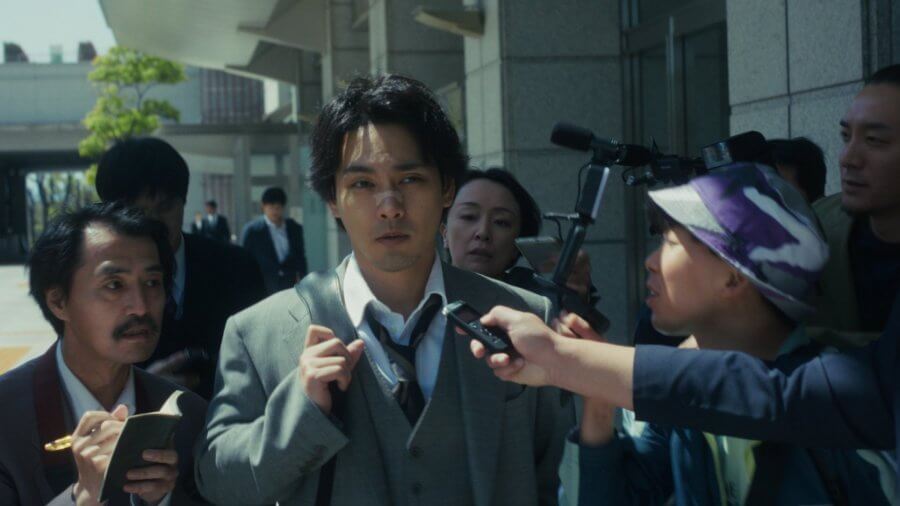
Right off, the story kicks into gear with a hit-and-run trial that seems hopeless from the start. Then Kujo walks in, tearing apart the state’s argument piece by piece. Not once does he ask what’s fair. Instead, his eyes lock onto cracks in the law. A gap here, a rule twisted there – that is where he thrives. This time around, I saw clearly that Kujo doesn’t just play the game; he reshapes it. Every step he takes fits a pattern only he can see, placing people where they need to be without showing his hand. In those tight rooms, air thick with silence, you feel every unspoken threat hang heavier than words. Up high, above the streets, that’s where his truth lives, worn down by years and never pretending otherwise.
Episode 2 & 3: The Dignity of the Vulnerable
This story pulls back the curtain on hidden money traps and ruthless loan schemes. Desperation opens doors for abuse; we learn fast. Stepping into chaos, Kujo stands by someone tangled in debts and danger. Calculated moves define his approach, sharp rather than loud. When Kujo stepped inside, the balance of control changed right away. Because he knows legal rules well, those who scare others suddenly feel small. Sentences cut quickly, like they have somewhere urgent to be. What holds folks in repeating patterns becomes clear through how things unfold.
One step deeper, the story shifts toward a violent clash tied to street groups. Danger wraps around Kujo like fog, thick and constant. Facing individuals who treat lives as nothing, he stands still, untouched by fear. Details about his past begin to surface, slow, sharp pieces clicking together. The reasons behind his choices come clearer now. A quiet man shaped by loud moments. What stands out most is how he deals with the cops. Though his actions complicate their work, their admiration for his ability shows through anyway.
Episode 4 & 5: Family Ties
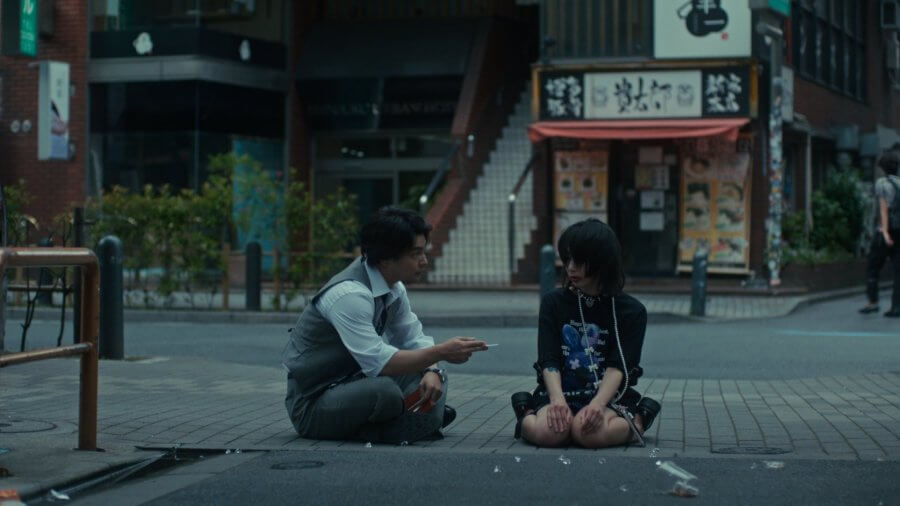
In episodes 4 and 5, the complex relationships between Kujo and his family are explored. We even get a peek into the life that he left behind to live in a tent. This is a complete other sub-plot when his daughter, Rino, is introduced. The contrast between Kujo and his normal icy look at her is intriguing. He attempts to be a father and, at the same time, be a lawyer of the underworld, and tension is high. The episodes succeed in brilliantly demonstrating how even the likes of Kujo are not able to totally forget their origins.
The case herein entails a juvenile crime that strikes a bit too close to home with Karasuma and Kujo. It questions their liaison with each other significantly. The idealism that Karasuma has is in conflict with the reality of the case, and it is just watching them go through the aftermath. The brilliance of Kujo is at full play since he is able to devise a means of safeguarding his client as he also addresses the personal threats that emerge.
The best part of the episode is when Kujo meets Rino. It gives it so much depth to his character without losing that Kujo touch. There is also a reintroduction of some old faces of the underworld, and it is quite evident that the personal and professional life of Kujo is heading for a head-on collision.
Episode 6 & 7: Remnants of Consumption
What happens in these episodes feels heavy. Loneliness gets twisted until it fuels profit. Hosts set quiet snares, guiding young women straight into debt. The way things unfold does not look away. Truth sits bare in each scene. Ghostlike, the acting in these scenes lingers long after. Light slips from faces when understanding hits. Standing still yet carrying everything, Karasuma holds the weight without words. Watching him react to Kujo’s icy calm feels like seeing myself on screen.
Episode 8 & 9: The Undetected Truth
Episodes 8 and 9 revolve around Kujo discovering a murder case of the past, which the police had been working so hard to cover up. He is forced to defend a man who is being framed as a scapegoat in order to defend a man who is much more powerful. Such an arc is so pleasing as we find Kujo employing each and every legal loophole that he has ever discussed to remain just a step ahead of the system.
The drama is spiced up by the introduction of the older brother of Kujo, who happens to be an elite prosecutor by the name Kurama. They are rivals of electricity. Kurama is the ideal legal order that Kujo is continually destroying, and their wordplay is a highlight in itself. The decades of family tension can be felt simmering under the surface. The fact that Kujo chooses to live in a tent and protect the unworthy makes his choice to do so even more like a rebellion.
It was a gut-punch to see Kujo actually discover that Detective Arashiyama has been playing with evidence to get him. The scenes in which Kujo is being trailed and threatened by the police are really chilling. It emphasizes how he is at the mercy of the lack of a large company to support him.
Episode 10: Chain of Violence
Out of nowhere, Karasuma walks away, and it hits harder than expected. Following all those shared battles, stepping into Nagaragi’s circle feels like a quiet betrayal, yet somehow right. That last dinner, talking about what their names really meant, felt close in a quiet way. Only now do we understand Kujo’s reason for standing by those labeled criminals. Not because he supports their actions, but because he sees fairness as non-negotiable. Should the system favor one person, then its foundation crumbles. So he accepts being hated. Works from the shadows. Stays firm even when Kurama, his own brother, pushes him toward the breaking point.
Nobody saw it coming, but Mibu plays things way ahead of everyone else on screen. Outsmarting Sugawara by exposing that his crew answered to Mibu instead was cold, precise brilliance. Power shifts quietly, and his eyes are locked on Kyogoku’s throne beneath the city’s surface. Then, just as plans settle, Inukai grabs Takeshi, Kyogoku’s boy. Now every second ticks louder while Mibu scrambles before blood spills across the streets.
What stood out most was how much the characters grew. Though things moved at a slower pace, Karasuma’s departure hit hard, while learning about Kujo’s past added depth. Standing alone on the roof once again, Kujo remains unbent by what’s happened.
✦ Watch This If You Loved
It is a must-watch for those who love anti-heroes and storylines that question your sense of right and wrong.
Drama Info
TitleSins of Kujo (Kujo no Taiza)
Total
Episodes10
Episodes10
GenreLegal · Crime · Psychological Thriller
Release
Date2nd April 2026
Date2nd April 2026
Stream
🎬 Netflix
Main Cast

Cha Eun-woo
Lee Woon-jung

Park Eun-bin
Eun Chae-ni

Choi Dae-hoon Son
Kyung-hoon
Im Seong-jae
Kang Ro-bin
Also Featuring
Kim Jeon-bok (Kim Hae-sook)
Chae-ni’s grandma
Son Hyun Joo
Ha Un Do - Wunderkinder leader
Jeong E Suh
Seok Ju Ran - Wunderkinder
Choi Yun Ji
Seok Ho Ran - Wunderkinder
MAB Score
7.5/10
Overall Rating
Story
Acting
Vibe
How we rate dramas
The MAB ScoreEvery drama we review gets two scores from the MAB binge team. A MAB Score and a Rewatch Score. Here is how both work.
MAB Score
out of 10
Our overall rating for the drama. We look at everything that went into it.
Acting
Chemistry
Story
Cinematography
Emotional Impact
Rewatch Score
out of 10, with a reason
Separate from the MAB Score because a drama can be a 9.5 and still be something you just cannot bring yourself to put on again. We always give a short reason so you know what you are getting into.
Below 6 on the Rewatch Score? Not putting it on again.
What the numbers mean
8.5 - 9+
Do not sleep on this one. Watch now.
We watched it and loved it. Genuinely a must watch.
6 - 8
Good. Worth it.
Mostly we find these genuinely worth your time. Read the full review, check if the genre or cast is your thing, and go for it.
Below 5
Dropped or skipped.
We will tell you why. Sometimes there is still a reason to check it out, especially if you love the cast. The review will say.
Personal opinions from whoever on the team watched it. Not a formula, just a genuine take.
2 Comments
[…] Sins of Kujo Review: Yuya Yagira's New Legal Drama on NetflixApril 9, 2026 at 1:05 pm […]
[…] Oh, let’s talk about Hayato Isomura again, shall we? That man is a chameleon. He completely changes colours depending on the role, and his performance as Ryu honestly left me stunned. If you’ve seen him play more intense or villainous characters before, watching him as Ryu will genuinely give you emotional whiplash. Ryu is fragile, quiet, and constantly weighed down by guilt and regret. Then you place him next to Taecyeon, who radiates pure strength, protection, and steady comfort, and somehow the contrast between them works perfectly. Their chemistry is so natural that it never feels like acting. It genuinely feels like watching two lonely souls slowly discover each other in a massive, overwhelming world. That said, the series isn’t perfect, and I have to admit there were a few moments that made me pause. The subplot involving Ryu’s old friend in Japan, played by Koshi Mizukami, felt slightly underwhelming at times. Whenever the drama stayed away from Johan and Ryu for too long, I found myself wanting to rush back to their story immediately. I can understand why some viewers might call parts of the show “pretentious,” but honestly, I think it fits the overall atmosphere. This is a drama about emotions, longing, and the human soul, so the slower and more artistic moments feel intentional. I genuinely think I lost the most water weight during Episode 7 because I cried so much. Without spoiling too much, the way the series handles the idea of “home” is absolutely beautiful. After spending ten years running from pain, Ryu slowly realizes that home isn’t a place, it’s a person. And yes, I’m obviously talking about Johan. That emotional payoff destroyed me in the best way possible. Sins of Kujo Review (Episodes 1-10) […]
Your comment is awaiting moderation.
[…] I was hooked by the cozy and friendly atmosphere of the clinic from the very beginning. Episodes 1 and 2 did a great job of pulling me into Ichito's hectic work life. I couldn't help but admire how he managed to keep such a calm and collected demeanor at work while clearly trying to hide his own awkwardness and emotions underneath. Nakajima Kento's quiet, restrained performance is so effortless! Yumi's story comes more into focus in Episode 2, and I really enjoyed watching her relationship with Ichito develop naturally instead of feeling rushed. The supporting characters at the clinic also bring so much life to the show with their witty banter and playful personalities. I especially enjoyed Saigawa Yuta (Miura Ryota) and Natsume Marin (Sawako Fujima). Their jokes and playful moments kept the drama feeling light and fun, even when the story touched on more serious emotional topics. Ichito and Yumi's love story isn't your typical romance. It's also about the challenges of building a relationship when two people are carrying a lot of emotional baggage. Their relationship isn't wild or overly dramatic. Most of the time, it's simple, quiet, and surprisingly calm. But that's what makes their struggles feel so real to me. You can see how much they want to become more than just friends, while their own issues and depression sometimes make it difficult for them to move forward. Sins of Kujo Review (Episodes 1-10) […]
Your comment is awaiting moderation.
[…] The more subscribers the channel gains, the more complicated the plot becomes. After being humiliated in front of his crush, Kaho Asamiya (Meru Nukumi), in Episode 3, Shimura throws himself into a hardcore training program, while his frantic streamer partner, Toru "Kanegon" Kaneko (Araki Sugō), faces serious backlash from their online rivals. The middle of the season delivers some awesome action choreography. In Episode 4, the channel faces its first major crisis when a cocky veteran martial artist named Reo Shinjō (Kentarō Maeda) openly declares war on the Viral Hit crew and brutally attacks Kanegon. The tension and payoff reach a peak in Episode 5. The climactic battle between Shimura and Shinjō is absolutely jaw-dropping. The massive victory pushes the channel past the legendary one-million-subscriber mark and instantly attracts the attention of a dangerous underground criminal network known as BAD FELLOWS. Sins of Kujo Review (Episodes 1-10) […]